

Harold Robert Meyer
The ADD Resource Center · www.addrc.org
Reviewed: Oct. 26, 2026 · Published: Oct. 28, 2026
A shortage empties one shelf, not every option. You can move the prescription, take part of it now, or change the plan. What you ask, and in what order, decides how long you go without.
The pharmacist looks at the screen, then at you. “We’re out. It’s on back order. I don’t know when we’ll get it.” You have two pills left, a full day tomorrow (or a child with a math test), and a prescription for a controlled substance, which cannot be moved down the street as easily as an antibiotic.
Most people say thank you and walk out. That is the most expensive move available. The next ten minutes at the counter decide how long the gap lasts.
Key Takeaway
Do not leave with only “we’re out.” Leave knowing when stock is due, whether part can be filled now, and where the prescription can go next, then call your prescriber the same day.
Key Findings
- As of Oct. 26, 2026, the FDA Drug Shortages database lists mixed amphetamine salts tablets, lisdexamfetamine capsules and chewables, and two extended-release methylphenidate products as currently in shortage. The amphetamine listing dates to October 2022.
- Since Aug. 28, 2023, a retail pharmacy may transfer an unfilled electronic prescription for a Schedule II–V controlled substance one time, at the patient’s request, pharmacist to pharmacist, where state law allows.
- When a pharmacy can supply only part of a Schedule II prescription, federal rules give it 72 hours to fill the rest; after that, a new prescription is needed. A partial fill the patient requests runs on a different clock: 30 days from the date written.
- In June 2024 the CDC warned that people who look for stimulants outside licensed clinicians and pharmacies risk counterfeit pills that can contain fentanyl.
“A shortage tells you the shelf is empty. It does not tell you the plan is over. The people who get through it are the ones who make the second phone call the same day.” – Harold Robert Meyer
Five questions to ask at the counter
- When is the next delivery, and will you hold my quantity? “Back order” can mean tomorrow or January.
- Do you have it in another strength, or from another manufacturer? Two 10 mg tablets can sometimes replace one 20 mg, and a brand may be in stock when the generic is not. The pharmacist cannot make the switch without your prescriber, so a call naming exactly what is on the shelf is often the fastest fix.
- Can you fill part of it now? Ask which partial-fill rule applies and what happens to the balance. If stock will not arrive within 72 hours, a partial fill can strand the remainder.
- Can another store in your chain fill it? Chain stores often share a supply, but not always. Independent pharmacies frequently buy from different wholesalers.
- Can you transfer it? An electronic prescription qualifies for a one-time transfer to a pharmacy that has stock. The rule does not cover paper, so if you brought a paper prescription, take it with you.
Call ahead, then call your prescriber
Phone two or three pharmacies before you drive anywhere. Some will not discuss controlled-substance stock by phone, so expect a few dead ends.
Call the prescriber’s office the same day, not at your next appointment, with specifics: the exact product and strength, the expected delivery date, and which pharmacy has what. Ask for a plan for the gap. Options include a different strength, an immediate-release version of an extended-release medication or the reverse, another stimulant, or a non-stimulant. A non-stimulant is not a controlled substance and is not subject to production quotas, but it usually takes weeks to reach full effect. It is a longer-term change, not a bridge to Thursday.
Any change can trip your insurance. A new strength, or a brand in place of a generic, may need prior authorization, which can take longer than the shortage. Ask the prescriber’s office to start it with the new prescription, and ask the pharmacist to run the claim before you make the trip.
Do not stretch the supply by cutting or skipping doses on your own. Many extended-release products are not meant to be cut or crushed, and a changed schedule changes the very day you are trying to protect. If the medication that ran out is guanfacine or clonidine, call the prescriber the same day: the guanfacine extended-release label warns that stopping abruptly can cause rebound high blood pressure.
Mail-order pharmacies: finding a legitimate one
Mail order, especially through your insurance plan, can be a real option, but it draws on the same national supply, so it is not a way around a shortage. Before transferring anything, ask whether the pharmacy dispenses Schedule II stimulants and how it ships them.
The FDA’s BeSafeRx guidance lists the signs of a legitimate pharmacy: it requires a valid prescription, has a U.S. street address and phone number, has a licensed pharmacist you can reach, and is licensed by your state’s board of pharmacy. Two further checks:
- Verify it yourself. Look up the license on your state board of pharmacy’s website, and check the National Association of Boards of Pharmacy’s list of accredited digital pharmacies. A seal on the pharmacy’s own website proves nothing.
- Treat the offer as the test. A site that will send a stimulant without a prescription, or “provide” one after an online questionnaire with no real evaluation, has told you what it is.
Does the prescription have to be from your state?
Not under federal law. In June 2024 DEA guidance stated that neither the Controlled Substances Act nor DEA regulations bars a pharmacist from filling a controlled-substance prescription from a practitioner in another state, provided the prescription is legitimate. The guidance adds that state law may limit this, and individual pharmacies may set stricter policies. If you are filling across a state line, at college, while traveling, or near a border, call the pharmacy before the prescription is sent or transferred and ask whether it will fill an out-of-state stimulant prescription.
What a gap costs, and how to cover it
Benjamin Johnson and colleagues interviewed adults who struggled to get stimulants during the shortage, for themselves or their children. The disruption to symptom management carried costs at work, at school, and at home (Johnson et al., 2025 · Free full text (PMC)).
For most people, a few days without a stimulant is not a medical emergency. The cost is function: the symptoms come back. Tell the people who will feel it, a teacher, a manager, a partner, before the day goes sideways. Tighten the outside structure with lists, timers, earlier personal deadlines, and the body double you relied on before medication. Protect sleep, which a disrupted week erodes first.
Do not make any major decisions until the gap is over. Impulsivity and emotional reactivity return with the other symptoms, and they peak when something feels urgent. Quitting a job, ending a relationship, signing a lease, making a large purchase, or dropping a course can wait a week. If a decision truly cannot wait, talk it through with someone you trust before you act.
The shortcut not to take
A friend’s leftover pills, a stranger online, an overseas site that needs no prescription: each feels like problem-solving when you are most frustrated. Pills from outside the regulated supply may not be what they claim, which is the CDC’s point about counterfeits. Personal importation of controlled substances is not allowed even with a valid prescription; I explain why in Online and Overseas Pharmacies: What They Can (and Can’t) Do for You.
Before the next fill
- Check stock about a week before the medication is due.
- Ask your prescriber to prescribe electronically, so a transfer is possible.
- Keep a short list of pharmacies: at least one independent and, if your plan has one, its mail-order pharmacy.
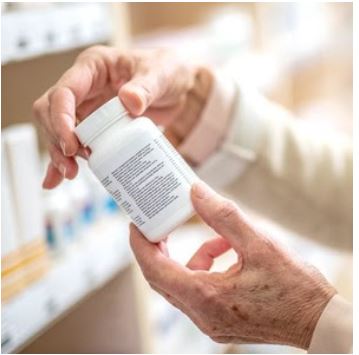
- Photograph the bottle label. It shows the product, strength, prescription number, and pharmacy, which is everything the next pharmacist will ask for.
- At a routine visit, ask what the backup would be if this exact product disappeared. That question belongs in the visit I described in Your ADHD Needs One Appointment a Year That Isn’t About the Prescription.
A Note for Clinicians and Educators
Clinicians: the CDC’s 2024 advisory asks you to talk with patients about shortage-related filling problems, offer other FDA-approved ADHD treatments when a prescribed medication is unavailable, and warn patients about medication from unlicensed sources. In practice, that means agreeing on a backup before a shortage, recording acceptable alternative strengths and formulations, returning pharmacist calls the same day, and prescribing electronically so prescriptions can move. Educators: a student whose medication has lapsed may look different for a week or two. Treat it as a supply problem the family is managing, not a change in effort, and tell the family what you see.
The next step
Tonight, write down the exact name, strength, and form printed on the bottle, the names and numbers of three pharmacies, and your prescriber’s after-hours line. Put it in your phone. If the counter says “we’re out” next month, you will already know your next three calls.
Synopsis
When a pharmacy is out of an ADHD medication because of a drug shortage, the first ten minutes at the counter decide how long the gap lasts. Written for adults with ADHD, parents, clinicians, and educators, this piece explains what the FDA lists as in shortage as of October 2026 and the federal rules that create options: a one-time transfer of an electronic controlled-substance prescription and two partial fill clocks (72 hours and 30 days). It covers five questions for the pharmacist, a same-day plan with the prescriber, insurance delays, not stretching doses alone (and not stopping guanfacine abruptly), how to verify a mail-order pharmacy, filling an out-of-state prescription, covering lost function and postponing major decisions during a gap, and why pills from outside the regulated supply, including counterfeit pills, are the shortcut not to take. It closes with prevention steps and a note for clinicians and educators.
Topic: Medication & Medical Management (primary) · Advocacy & Rights
Audience: Adults with ADHD · Parents & caregivers · Clinicians & prescribers · Educators
Keywords: drug shortage, one-time transfer, partial fill, mail-order pharmacy, counterfeit pills
Resources
From The ADD Resource Center
- The ADD Resource Center – ADHD articles, coaching, and screening
- Online and Overseas Pharmacies: What They Can (and Can’t) Do for You
- Your ADHD Needs One Appointment a Year That Isn’t About the Prescription
External
- FDA Drug Shortages database – search by active ingredient; updated daily
- CDC Health Advisory: Disrupted Access to Prescription Stimulant Medications – the June 2024 advisory
- FDA BeSafeRx: Considering an Online Pharmacy? – signs of a safe online pharmacy, and warning signs
- NABP Accredited Digital Pharmacies – the accreditation list kept by the national association of state pharmacy boards
About the Author
Harold Robert Meyer founded The ADD Resource Center in 1993 and has spent more than thirty years translating the lived experience of ADHD into practical guidance for individuals, families, and the clinicians and educators who work with them. He co-founded CHADD of New York in 1989 and went on to serve on CHADD National’s board and executive committee, including as Vice President of Finance. He was later elected to lead the Institute for the Advancement of ADHD Coaching. An author and international speaker, he has presented at the American Psychiatric Association Annual Meeting, CHADD national and local conferences, NYU Langone, Mount Sinai Medical Center, and Weill Cornell Medical College. Reach him at [email protected].
📚 Come back often — we add new evidence-based ADHD resources daily.
The ADD Resource Center
[email protected] · +1 (646) 205-8080
127 West 83rd St., Unit 133, New York, NY 10024-0840 USA
X · LinkedIn · Facebook · Substack · Newsletter
Please consider the environment before printing.
Content on this site is provided for informational and educational purposes only. It is not medical, psychological, legal, financial, or other professional advice, and it is not a substitute for such advice. What is appropriate for one person may be ineffective or harmful for another. We strive for accuracy, but content may contain errors or omissions and may become outdated. Content has not necessarily been reviewed by a licensed professional. Some content and images may be created with AI assistance and, although reviewed by us before publication, may contain inaccuracies. Our screening tools are for educational purposes only and are not diagnostic instruments. Before acting on anything here, verify it independently and consult a qualified professional. ADDRC assumes no responsibility or liability for actions taken, decisions made, or outcomes resulting from the use of this website or its content.
In the USA and Canada, call or text 988 anytime for free mental health and suicide prevention support, or call 911 if someone is in immediate danger. The ADD Resource Center is independent from these services and is not liable for any actions taken by you or by these services.
Under GDPR and CCPA, you may request access to, correction of, or deletion of your personal data at [email protected].
© 2026 The ADD Resource Center. All rights reserved. For permission to reproduce, contact [email protected].